
Oxbridge Personal Statement Support: Why We Never Use AI
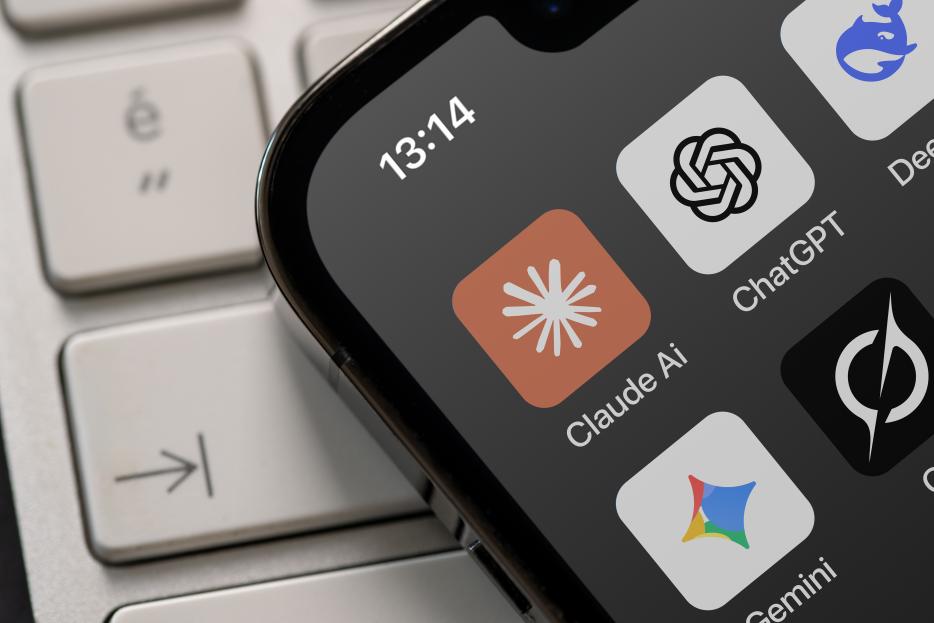
Over the past two years, we have watched artificial intelligence quietly reshape the university application process.
Tools that draft and "improve" personal statements in seconds are now widely available, and it is tempting to assume that every educational consultant is using them in some form.
At William Clarence, we are not, and we never will be. Our Oxbridge personal statement support is built on conversation, reading and honest feedback, and every word of the finished statement belongs to the student.
Why does this matter?
A personal statement is meant to be personal.
Admissions tutors are highly experienced readers. Across thousands of applications a year, they develop a sharp instinct for tone and voice.
Many can now spot the smooth, slightly generic quality that AI-generated writing tends to create, even when a student has tried to personalise it afterwards. Universities have started saying so publicly and we are sure that scrutiny in this area will only increase.
There is a practical risk too. UCAS's declaration asks every applicant to confirm that the statement is their own work, and every submission is checked for similarity before it reaches an admissions team. A statement that gets flagged does not quietly disappear.
The universities on the application are told about it, and what happens next is up to them.
More importantly, a personal statement written mostly by a machine cannot reflect a student's thinking, curiosity, or way of expressing themselves.
For the UK's most competitive courses, and particularly for anyone applying to Oxford or Cambridge, authenticity is often the difference between an application that stands out and one that is forgotten.
Given the acceptance rate on most Oxbridge courses, that difference is not a small one.
So what do we do instead?
Every student we work with is paired with an educational consultant who takes the time to get to know them: their interests, their reading, their reasoning, their doubts.
Our Oxbridge and UCAS experts and medical applications specialists have spent years reading and shaping statements the traditional way, through conversation, drafting, and honest feedback.
That means talking about the chosen subject in real detail.
-
What has the student read beyond the classroom, and what did they make of it?
-
Which ideas in their subject area do they find unconvincing?
-
Where has their thinking changed in the last year?
Those conversations are where a statement for Oxford or Cambridge finds its argument, and they are not conversations a chatbot can have on a student's behalf.
This process is slower, and it asks more of the student. But it produces something an AI tool cannot: a statement that sounds like the student who wrote it, because they did.
What Oxbridge personal statement support looks like in practice
Most students come to us in good time, long before the deadline. Since 2026 entry, UCAS has replaced the single free-text personal statement with three shorter questions covering motivation, academic preparation and experience outside education, and the same format applies in the current cycle.
The structure has changed.
What Oxford and Cambridge are reading for has not.
A typical piece of work runs like this:
-
A first conversation about the chosen course, the academic journey so far, and how their A levels or IB subjects fit it.
-
Reading and research set by the consultant, inside the syllabus and well beyond it.
-
A first draft written entirely by the student.
-
Rounds of questions, honest feedback and rewriting, then a final proofread.
We do not hand back a rewritten statement with our own sentences in it. We ask questions, point out where an argument is thin, and send the student away to think again.
By the time the statement is finished they can defend every line of it, which matters when an interviewer opens with a line lifted straight out of it.
Because we also prepare students for each admissions test and for interview, the statement is written with the rest of the application process in mind.
Work experience, extracurricular activities and non-academic interests all have a place, but at Oxford they earn that place by showing something about the way a student thinks.
Isn't this a disadvantage, if others are using AI?
We argue the opposite.
As AI-assisted statements become more common, admissions tutors are becoming better at recognising them, and increasingly wary of them.
A statement that feels considered and true to the applicant's own voice is likely to stand out more in a landscape full of polished but faintly interchangeable prose.
Our medical applications experts see this particularly clearly. Medicine is a field where self-awareness and the ability to reflect on real experience matter enormously, both at application stage and beyond.
There is no shortcut that replaces a student sitting down and working out, in their own words, why they want to do this.
What does this mean for you?
If you are choosing an educational consultant to support your application, it is worth asking directly what role, if any, AI plays in their personal statement writing process.
At William Clarence, our answer is none. Every word is the student's own, shaped through proper guidance from experts who have done this for years.
If you would like to discuss how we can support your Oxbridge or medical application the traditional way, you are welcome to get in touch with one of our admissions consultants.
Frequently Asked Questions
Can I use AI to write my UCAS personal statement?
Not without real risk. UCAS asks you to declare that the statement is your own work, and every submission is checked for similarity before universities see it. Using a tool to help plan your reading is a different thing from letting it write for you. The line is authorship, and if you are applying to Oxford or Cambridge it is not a line worth going near.
Do tutors at Oxford and Cambridge really notice?
Experienced readers notice a voice that does not match the rest of the application. The bigger problem comes at interview, where a student has to talk about ideas they claimed to find fascinating. If the writing was never really theirs, it shows within minutes, and authenticity is tested at every stage of the admissions process.
What makes a personal statement for Oxbridge different from any other?
A personal statement for Oxford or Cambridge is read almost entirely for academic interests and subject depth.
The great majority of it should be about the course itself, and the rest should earn its place by feeding back into that. Grades, coursework and predicted results are assessed separately, so the statement is where students who apply to Oxford or Cambridge show an understanding of their subject that goes past what school required of them.
Cambridge also asks applicants to complete an additional form of its own, so the UCAS answers sit alongside more subject-specific material.
When should we start?
Year 12 is ideal. It leaves time for the reading to happen first, which is what makes the writing easier later. Start writing your personal statement only once there is something real to write about, not the other way round.
How much help is too much?
Guidance, questions and honest feedback are fine, and universities expect students to have had help from teachers and family. Someone else writing the sentences is not fine. A simple test: if a student cannot explain why a paragraph is there, it should not be there.
Do you only work with undergraduate applicants?
Most of our work is with students hoping to study at Oxford, Cambridge and other leading universities at undergraduate level, and admission to those courses is where the statement carries the most weight. The same approach applies to postgraduate applications, where the case a candidate makes for themselves matters just as much.